
Why Test a Handle Thermos Cup?
Many handle thermos cups on the market look similar, but actual insulation performance can vary significantly. For buyers, product photos and basic specifications are often not enough to judge real quality.
To better understand how this type of product performs, we tested a sample under real-use conditions, focusing on heat retention and cooling performance.
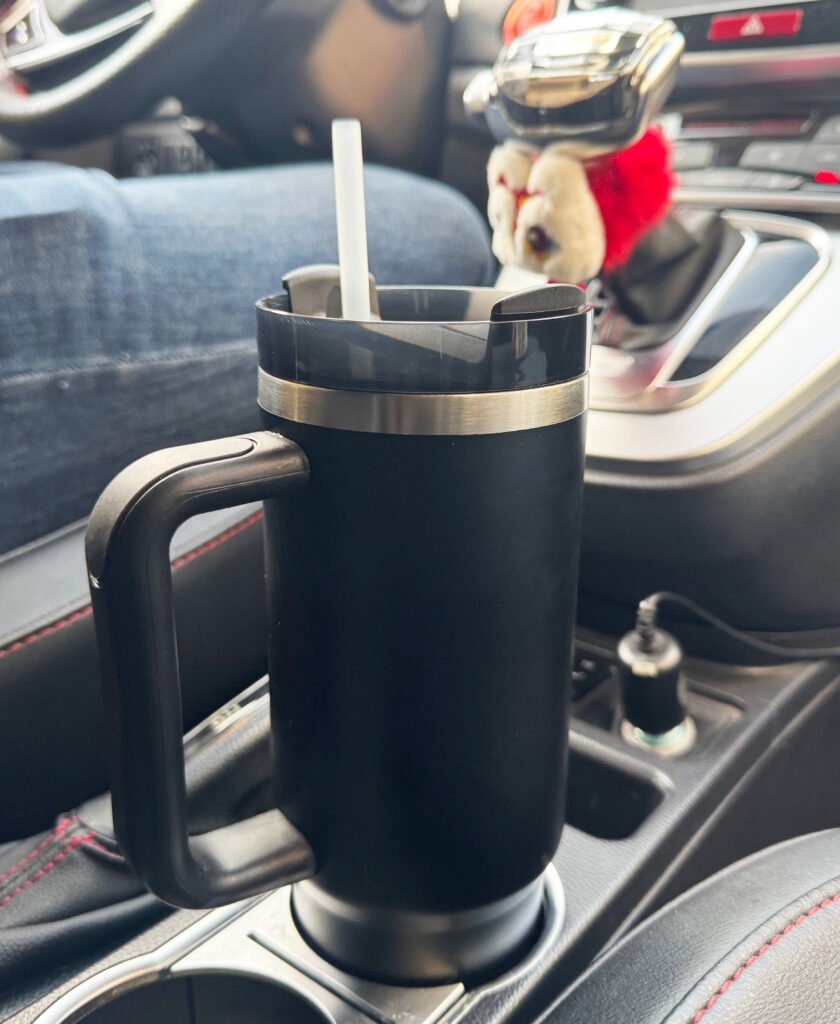
Product Overview
Capacity: 1200 ml / 40 oz
Interior: 304 stainless steel
Exterior: 201 stainless steel
Claimed Insulation Performance: up to 12 hours
How We Tested the Sample
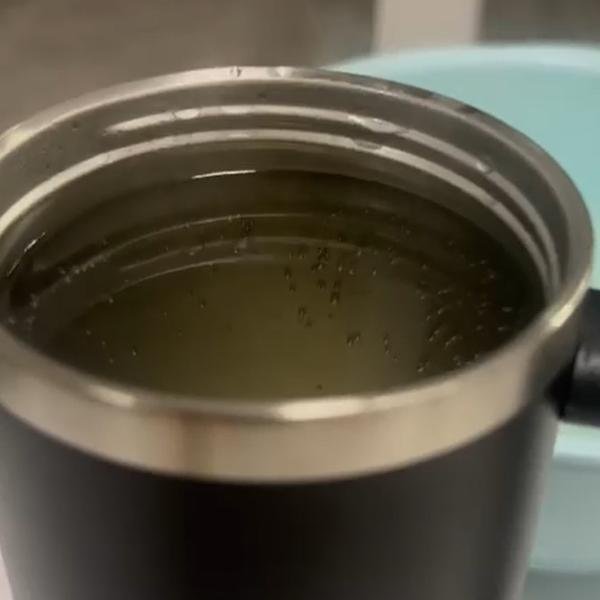
1. Starting the Heat Retention Test(Day 1, 23:30)
We filled the thermos cup with boiling water and left it overnight to observe its heat retention performance.
→ What buyers should pay attention to:
Initial heat retention helps indicate whether the insulation structure and sealing quality are stable.
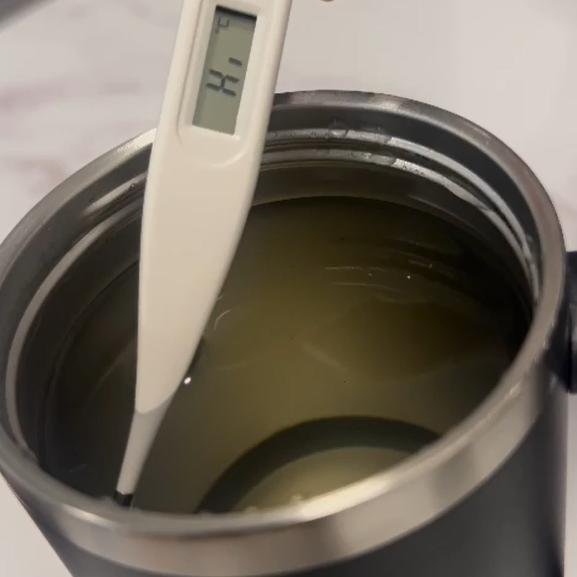
2. After 8 Hours: Temperature Still Above 50°C(Day 2, 7:30)
After 8 hours, the temperature remained above 50°C, showing strong overnight insulation performance.
→ What buyers should pay attention to:
This is a useful benchmark for daily-use thermos products.
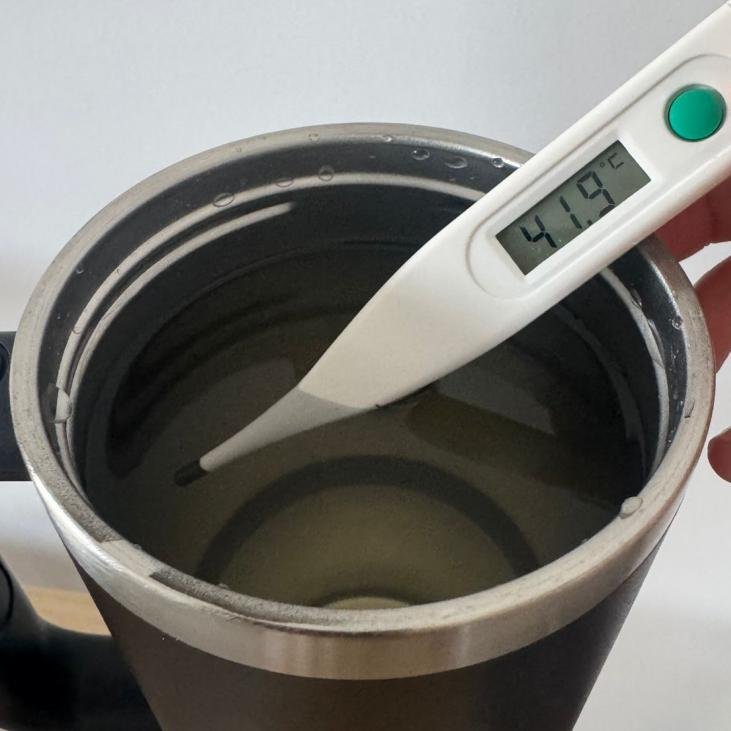
3. After 14 Hours: Temperature at 41.9°C(Day 2, 14:00)
After 14 hours, the temperature was still 41.9°C. We then moved on to cold retention testing.
→ What buyers should pay attention to:
Long-duration performance reflects insulation consistency, not just short-term results.
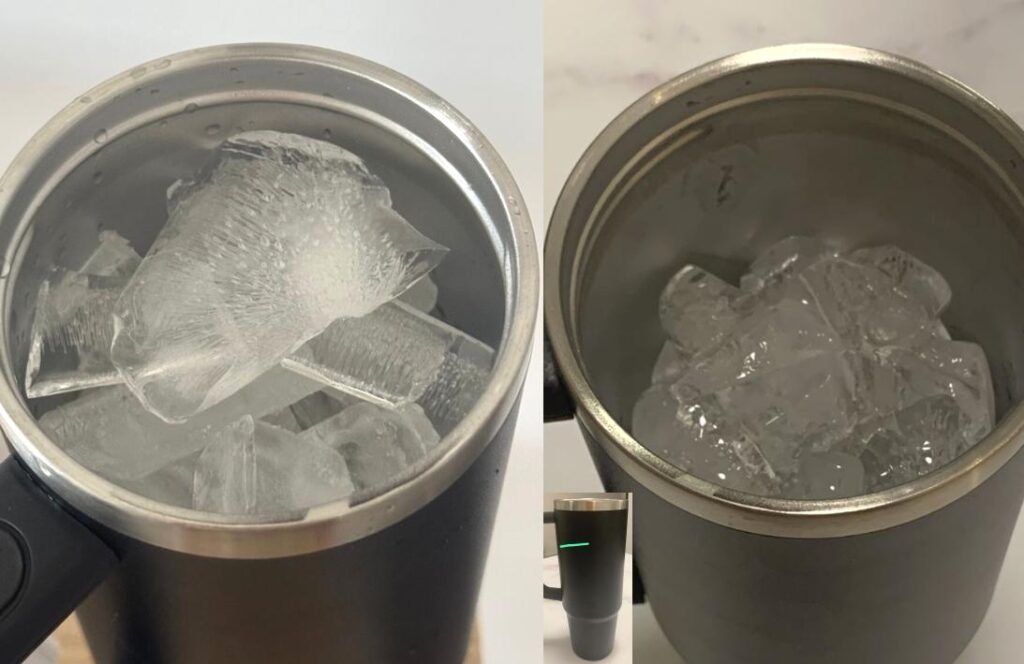
4. After 7 Hours of Cold Retention Testing(Day 2, 21:30)
After 7 hours, most of the ice remained intact in the cup.
→ What buyers should pay attention to:
Stable cold retention is important for outdoor use and long-duration scenarios.
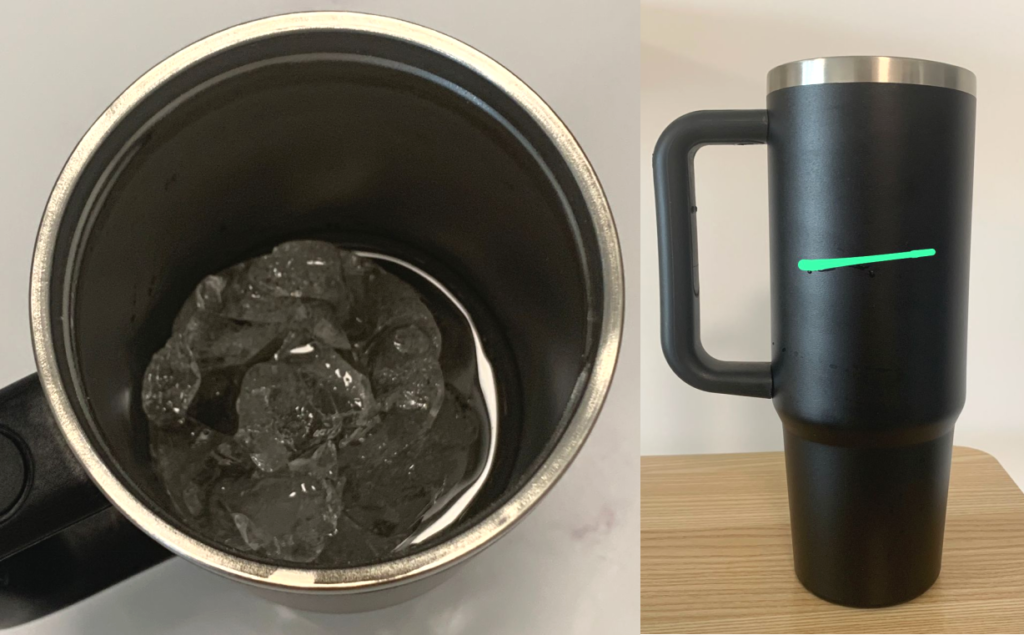
5. After 21 Hours of Cold Retention Testing(Day 3, 11:00)
Even after nearly a full day, a significant amount of ice was still present.
→ What buyers should pay attention to:
Long-duration cold retention is a key factor when comparing similar products from different suppliers.
Related Product Direction (Reference)
If you are reviewing similar drinkware products, you can also check this sourcing reference page: Handle Thermos Cup
This page is not a fixed retail product listing. It is a sourcing reference showing the product category, structure, and customization possibilities.
What the Test Results Mean for Buyers
This sample showed stable performance in both heat retention and cold retention testing.
For buyers, the more important point is that thermos cups with similar appearance, size, or material may still perform differently in actual use. Insulation structure, material quality, lid sealing design, and production consistency can all affect the result.
When sourcing thermos cups, it is risky to rely only on product photos, basic specifications, or supplier claims. It is better to review actual test results, compare samples, and evaluate consistency before placing bulk orders.
The right choice is not simply the cheapest one, but the one that matches your actual use scenario and performance expectations.
How We Can Support Your Sourcing Review
If you are comparing thermos cup suppliers or reviewing sample options, you can share your current offers with us.
We can help you:
· compare performance differences
· evaluate supplier quality
· identify potential risks before order
This helps avoid choosing based only on price or catalog descriptions.