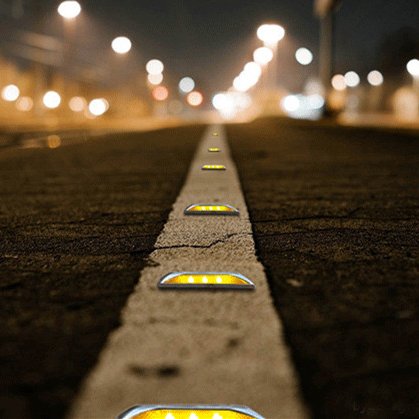
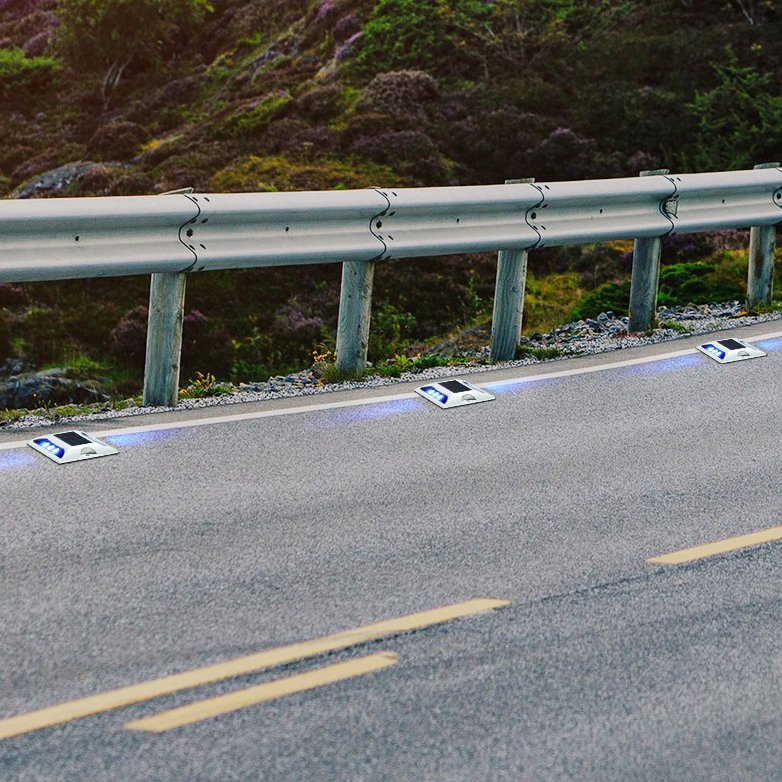
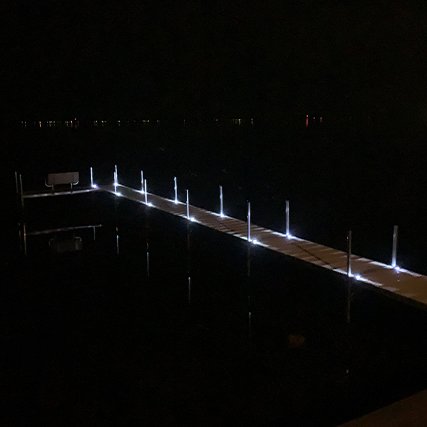
Night-time Visibility Test of Solar Road Studs: Real Footage for Buyer Reference

Intro

Night-time visibility is one of the first things buyers look at when comparing solar road studs. But standard product photos do not always show how the studs actually appear once installed outdoors after dark.

This page is intended as a sample-testing reference based on real footage. By showing three solar road stud models in actual night-time conditions, it helps buyers build a more direct visual understanding before moving on to model selection, project discussion, or quotation.
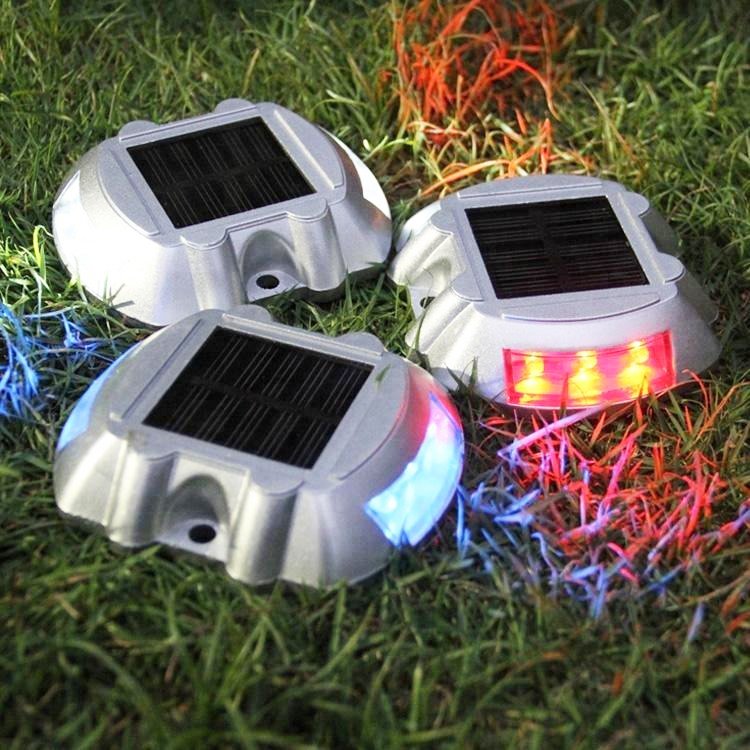
Three solar road studs lighting up in white, green, and blue on grass at night

What Are
Solar Road Studs?

Solar road studs are self-illuminated safety markers used to improve visibility and guidance in roads, pavements, pathways, driveways, docks, parks, and other outdoor areas.

They charge during the day through solar panels and light up automatically at night. Compared with traditional reflective markers, solar road studs remain visible even when ambient light is limited, which is why their actual night-time effect matters in many projects.
Real Footage: How Bright Are They?

We recorded real outdoor footage of three solar road stud models at night to provide a more practical visual reference.

When reviewing this kind of footage, buyers should not focus only on which model looks brightest at first glance. It is also useful to observe the lighting effect from different viewing angles, the difference between steady-on and flashing modes, and how each design may fit different use environments.

For projects involving private property, pathways, landscape guidance, or public-facing safety applications, this type of reference can help narrow down options before deeper technical comparison.

Which Solar Road Stud Fits Your Needs?

Different solar road stud designs may suit different projects depending on the installation surface, visual preference, and lighting purpose.
Here is a quick reference to the three models shown in this night test.

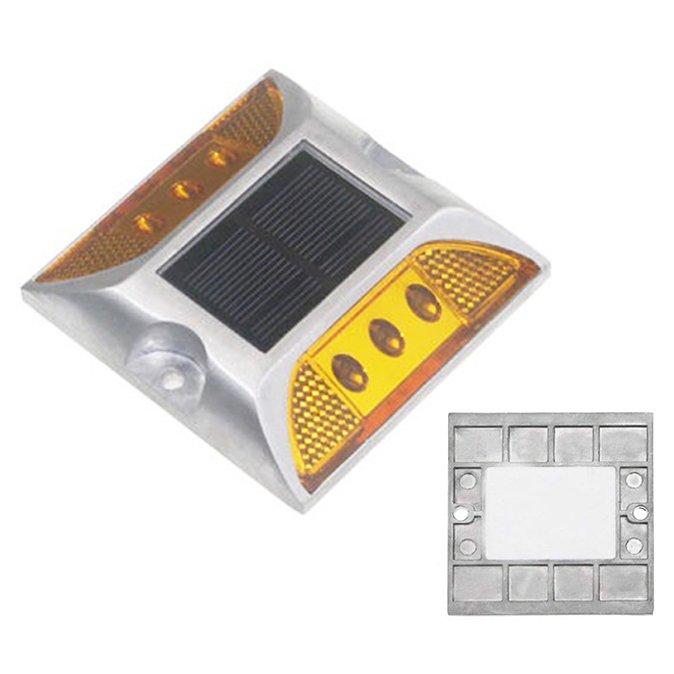
White background image of horse-shoe shaped solar road stud with front and back sides

This model features a classic curved structure with a relatively low-profile appearance. Buyers can choose one fixed LED color and one lighting mode. It is often considered for pathways, curbs, and garden-edge guidance.

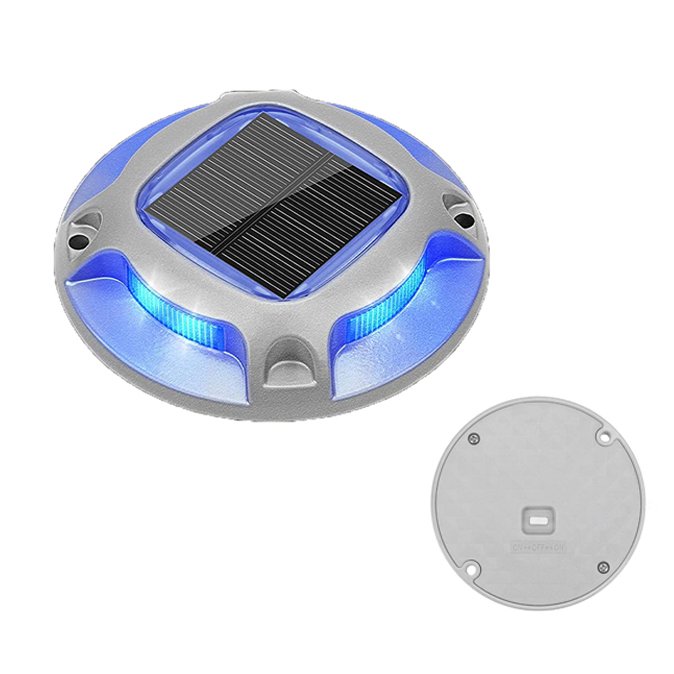
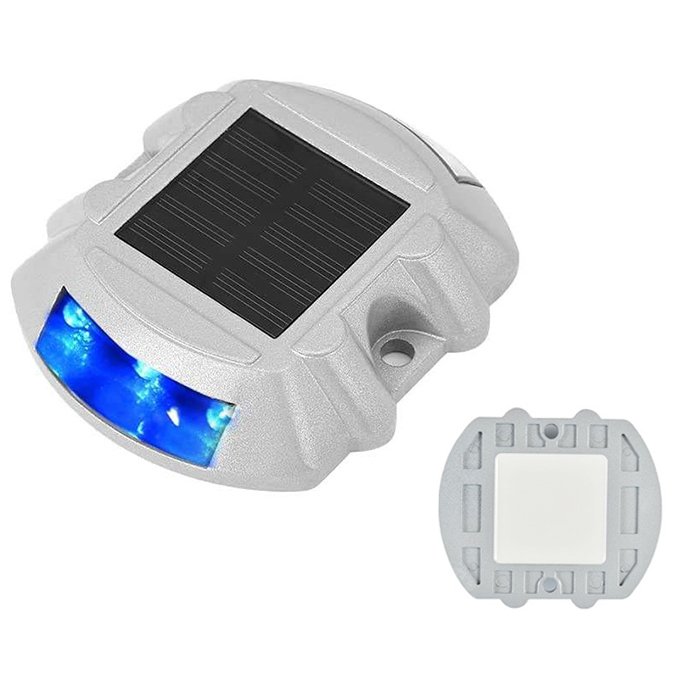
Front and bottom view of square-shaped solar road stud with blue and white lights

This square design offers a more geometric appearance and is suitable for projects where a cleaner layout is preferred. It is commonly used in walkways, wooden decks, and private driveways.

Round solar road stud with bottom switch for CCT adjustment

This model includes a built-in CCT switch with two preset color temperatures. It is suitable for buyers who want more flexibility in visual effect while still deciding the lighting mode based on project needs.

Installation Reference:
What to Check Before Fixing
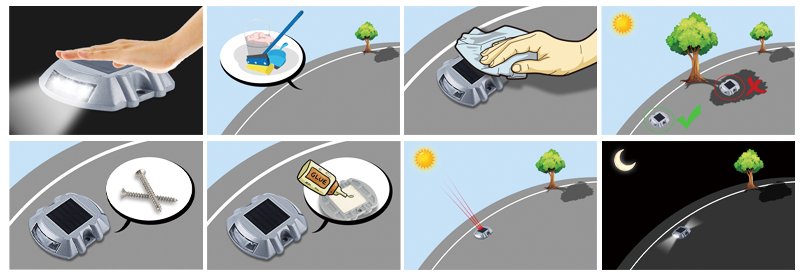
Installing solar road studs is not complicated, but a few checks should be made before final fixing.

Step-by-step image guide showing solar road stud installation process

Test the Light and Choose a Sunny Spot

Before installation, cover the solar panel to simulate darkness and confirm the light responds properly. The selected position should receive enough direct sunlight for daily charging.

Check the Surface Condition

The installation surface should be flat, clean, and suitable for fixing. Dust, uneven ground, or poor surface preparation may affect the final result.

Confirm the Fixing Method

Screws and adhesive are both used in practice, but the suitable method depends on the project condition, expected service life, and whether later removal may be needed.

Allow Proper Charging Before Use

A full daytime charge is recommended before judging the actual night-time effect. Auto-on and auto-off performance should also be checked in real conditions.

Where Can You Use Solar Road Studs?
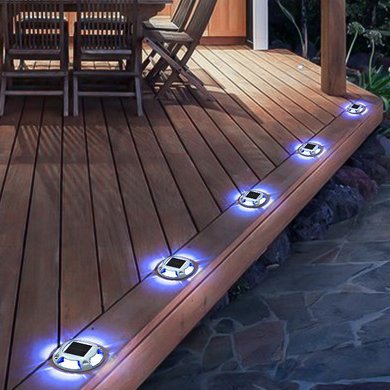
Solar road studs can be used in a range of outdoor applications, including driveways, garden paths, walkways, parks, docks, roadside guidance areas, and other locations where night-time visibility is important. These examples are useful as project reference, but the right model should still be chosen based on actual installation conditions, expected traffic level, preferred lighting effect, and fixing method.
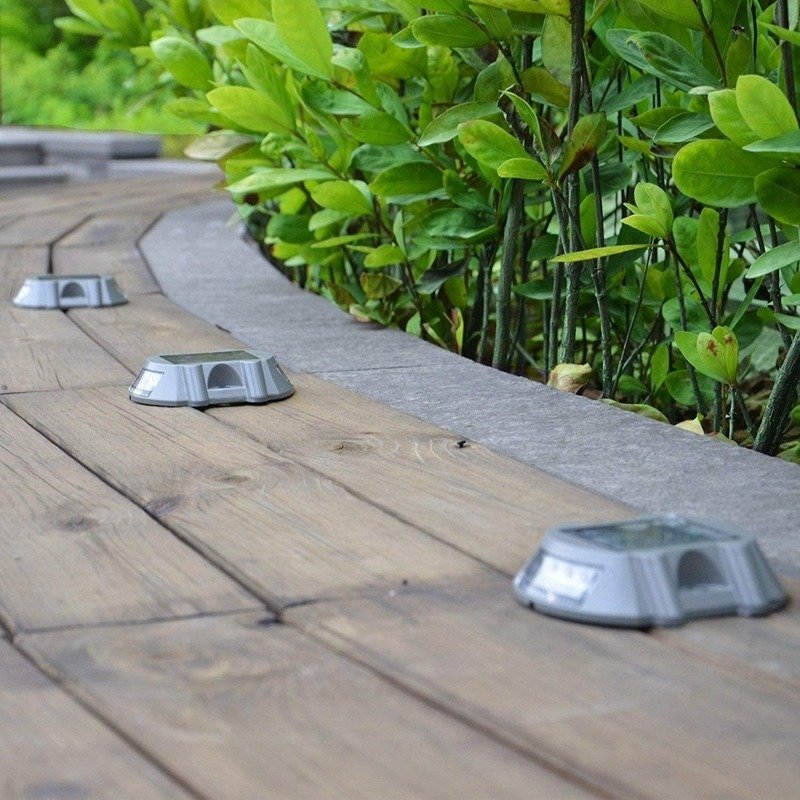
Solar road studs installed on pavement walkway during daytime
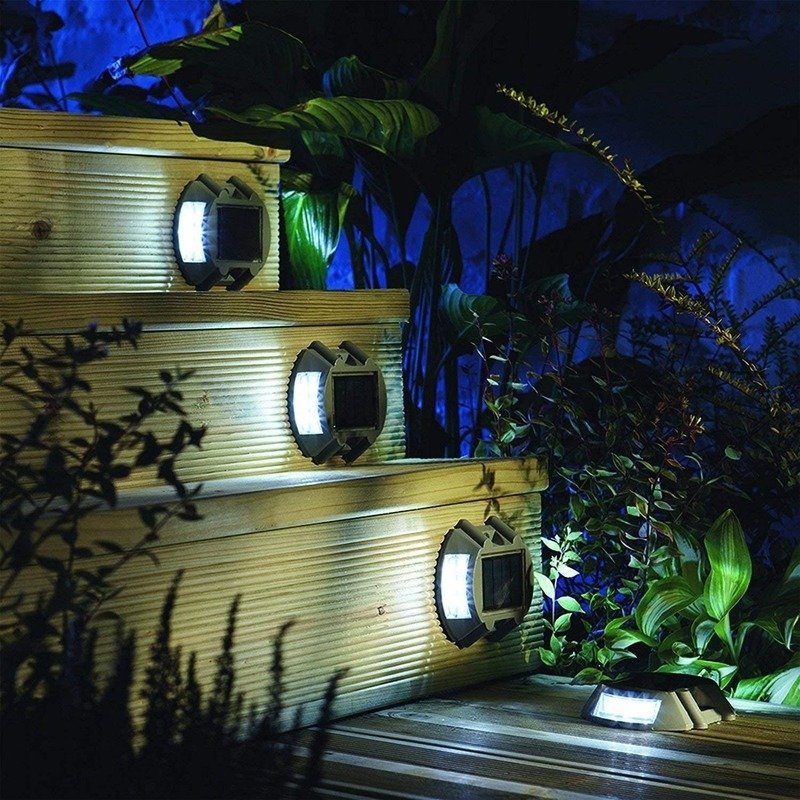
Solar road studs lighting steps of an outdoor park staircase at night
Solar lights installed on wooden deck path in residential garden at night
Roadside application of solar road studs in park area at night
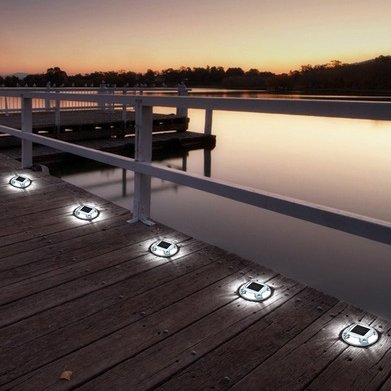
Solar studs installed on waterfront dock boardwalk at night
Solar pavement markers embedded in vehicle driveway for nighttime visibility
Solar path markers installed on expressway lanes at night
Solar dock lights lighting a dark seaside or dockside bridge at night

Next Step

If you are comparing solar road stud options for a project, you can share your application details with us, such as installation surface, preferred color, lighting mode, quantity range, or reference photos. If you already have drawings, samples, or quotations from other suppliers, we can also help you review the options and narrow down what may be more suitable before quotation or bulk order.

This page is intended as a sample-testing and sourcing reference, not a fixed-stock retail offer.

Leave a Comment

Your email address will not be published. Required fields are marked *

Scroll to Top