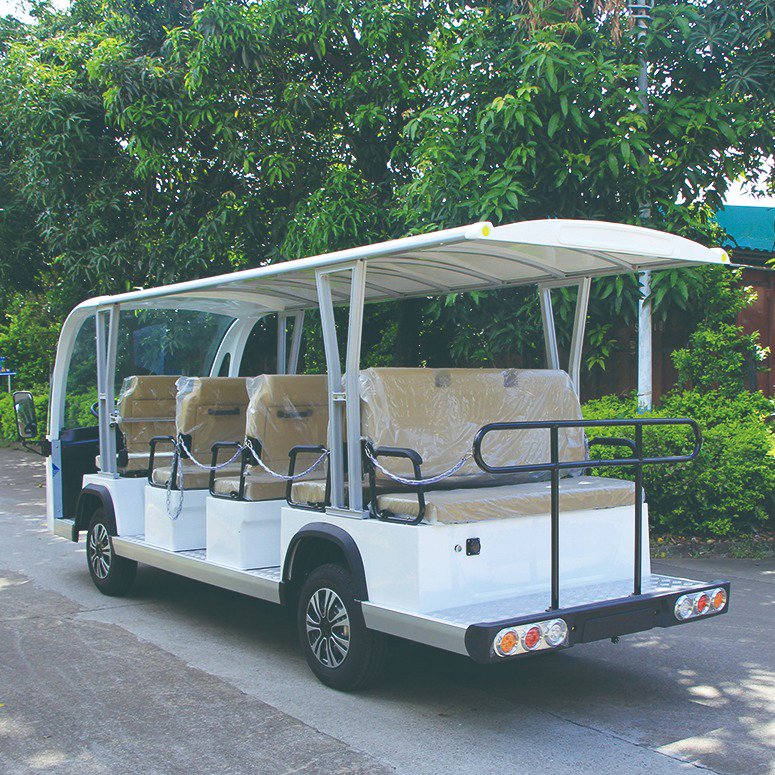
Product Overview
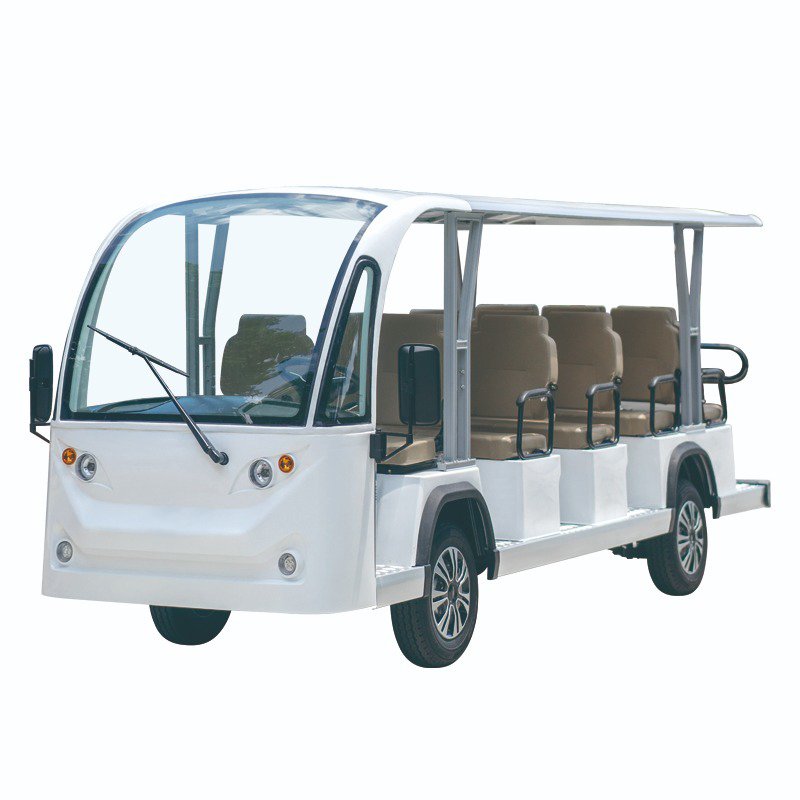
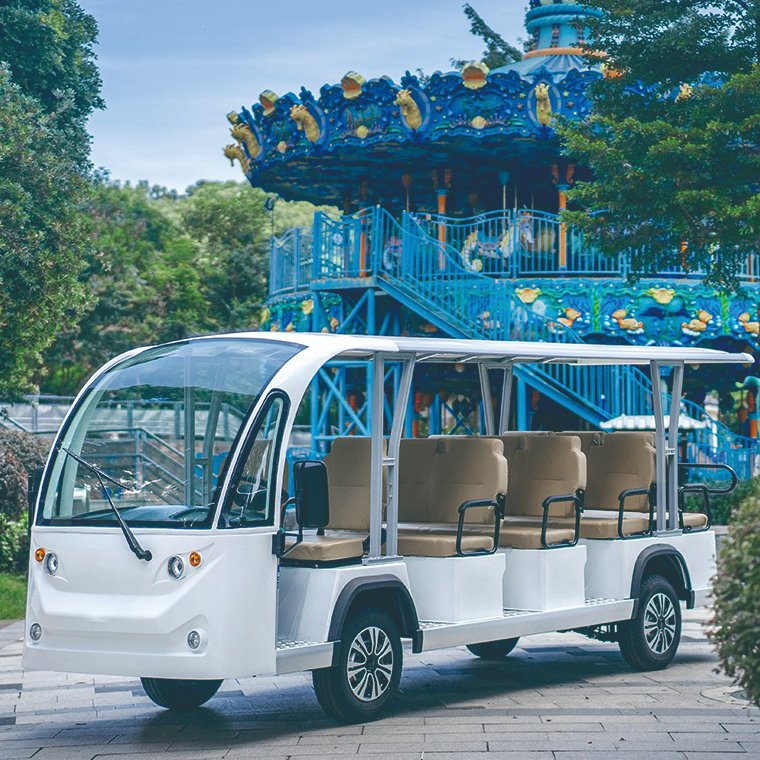
This 14-seater electric sightseeing vehicle is designed for short-distance passenger transport in resorts, campuses, parks, tourist attractions, large residential properties and other managed sites.
The reference configuration uses a 7.5kW motor and 12.2kWh lithium battery, with seating for 14 passengers. The supplier lists a maximum speed of 30 km/h and a reference driving range of 90 km under specified conditions.
Unlike smaller golf carts intended for low-capacity passenger movement, this type of vehicle is primarily used where operators need to move larger groups on repeated internal routes. Final configuration should be selected according to passenger flow, route conditions, operating frequency, local site rules and destination-market requirements.
What Buyers Usually Need to Confirm
Before sourcing an electric sightseeing vehicle, buyers should normally confirm:
- required passenger capacity and seating arrangement
- main operating environment, such as resort, campus, park, attraction or property shuttle
- expected daily operating distance and number of trips
- route width, turning space and minimum turning-radius requirements
- road gradient and required climbing capability under load
- maximum operating speed permitted within the site
- battery capacity, charging arrangement and available charging time
- weather-protection requirements, including open, partially enclosed or enclosed configurations
- braking, lighting and other site-safety requirements
- body colour, seat material, logo and fleet-branding requirements
- spare-parts and after-sales requirements
- expected quantity and shipment plan
- local certification, registration or customs requirements where applicable
For fleet and project orders, buyers may also need to confirm charger quantity, spare-parts packages, operating manuals, identification labels and vehicle numbering before production.
Typical Specifications
The following configuration is provided as a reference for this 14-seater electric sightseeing vehicle. Final specifications should be confirmed according to the selected supplier, project conditions and approved order configuration.
| Passenger Capacity | 14 seats |
| Dimensions (L×W×H) | 4960 × 1510 × 2100 mm |
| Range | 90km |
| Battery Capacity | Lithium 12.2kWh |
| Max. Speed | ≤30 km/h |
| Motor | 7.5kW |
| Braking Distance | ≤6 m |
| Min. Turning Radius | ≤6.5 m |
| Axle Distance | 2770 mm |
| Min. Ground Clearance | 140 mm |
| Climbing Ability (Full Load) | ≤20% |
| Brake System | Front disc / rear drum, hydraulic dual-circuit braking, handbrake parking brake, vacuum-assisted braking |
| Suspension | MacPherson independent front suspension / integral rear axle |
| Kerb Weight | 1232 kg |
Range, Passenger Capacity & Site-Use Notes
Range figures should be treated as reference values rather than guaranteed real-world performance. Actual driving range can vary according to passenger load, route gradient, driving speed, stop-and-go frequency, battery condition, temperature, tire pressure and vehicle maintenance.
The stated 14-seat capacity should also be considered together with total passenger weight, route conditions, braking performance and site operating rules. For frequent shuttle operation, charging time, daily trip frequency and battery reserve are usually more important than the catalogue range figure alone.
This type of vehicle is generally intended for controlled-site passenger transport. If the vehicle will operate on public roads, buyers should separately confirm local vehicle classification, registration, lighting, braking, identification and certification requirements before ordering. A configuration suitable for a resort, campus or private attraction may not automatically qualify for public-road registration.
Send Us Your Requirements
Send us your destination market, expected quantity, passenger capacity, operating environment, daily route, road gradient, battery preference and any branding or certification requirements.
JXNUO can help compare suitable China suppliers and configurations, confirm key specifications, coordinate samples or orders, follow production, arrange pre-shipment inspection and support shipment coordination.