
Product Overview
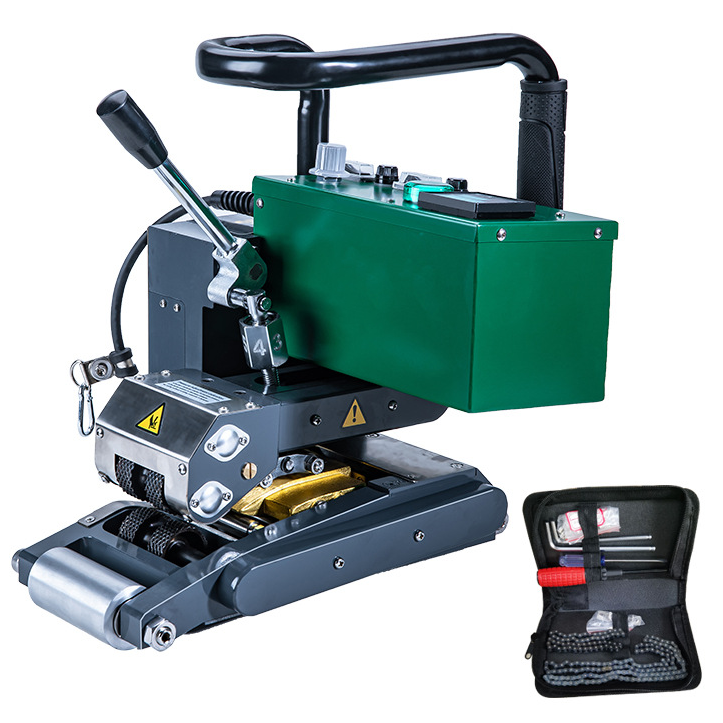
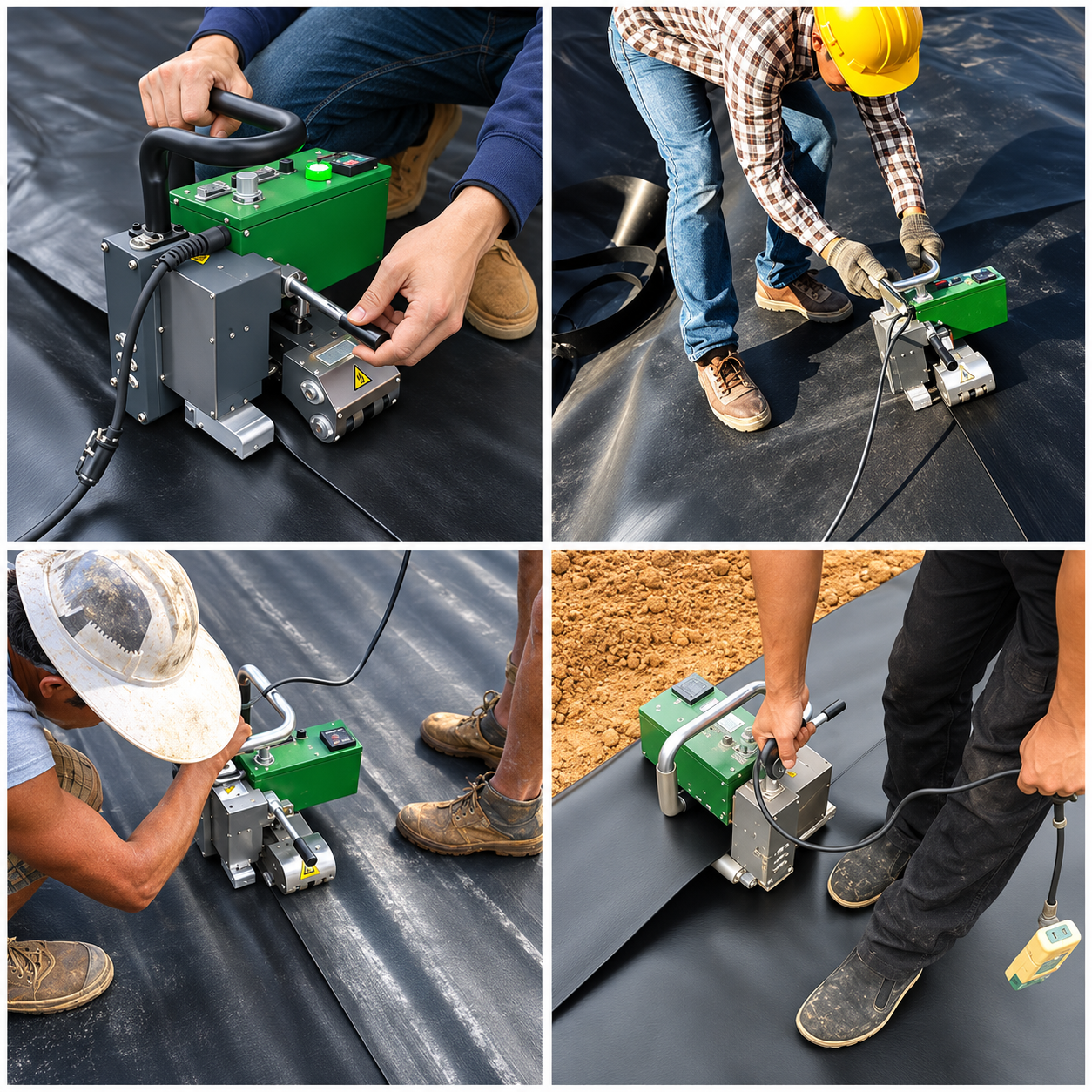
This automatic geomembrane welder is designed for continuous overlap welding of compatible thermoplastic liners used in waterproofing and containment projects.
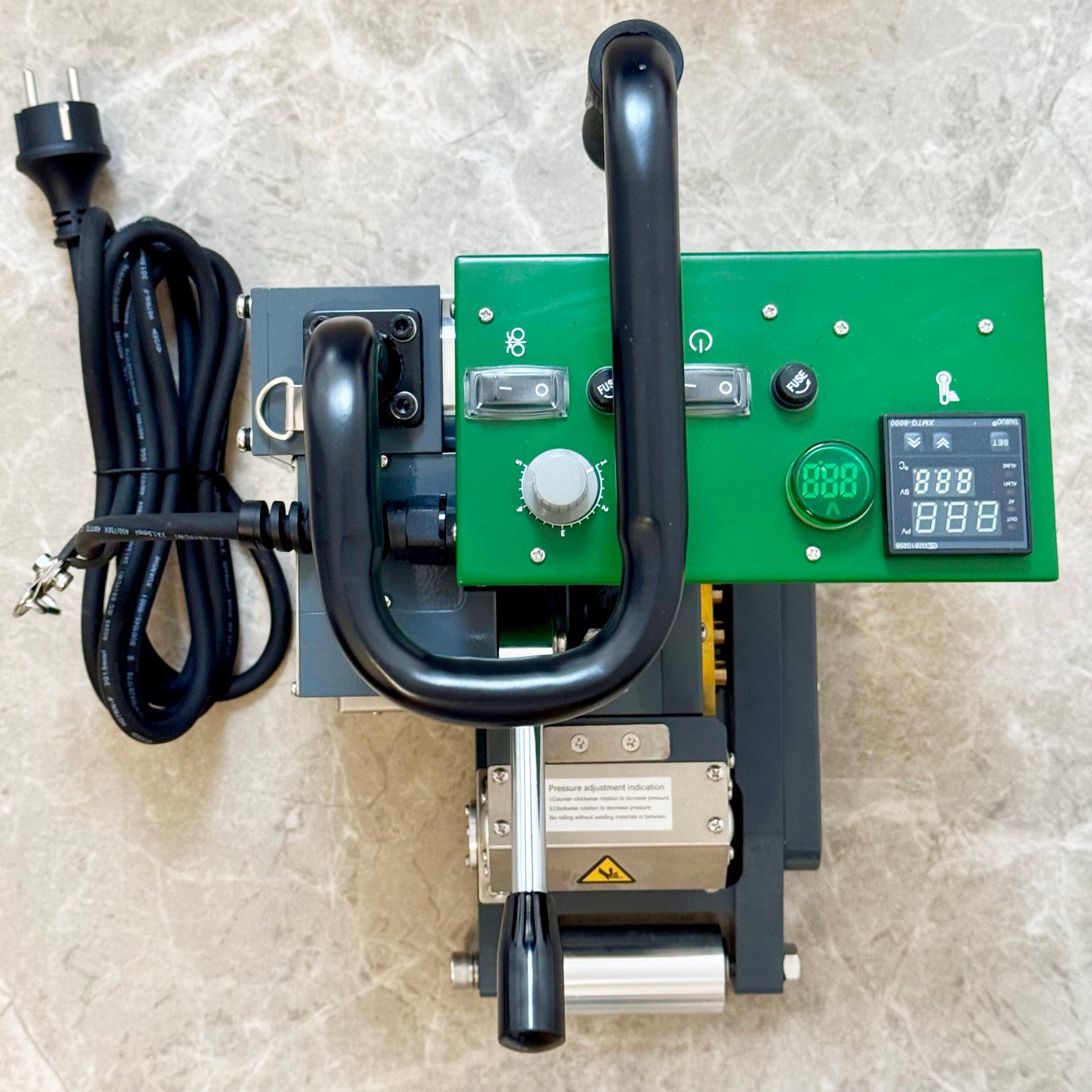
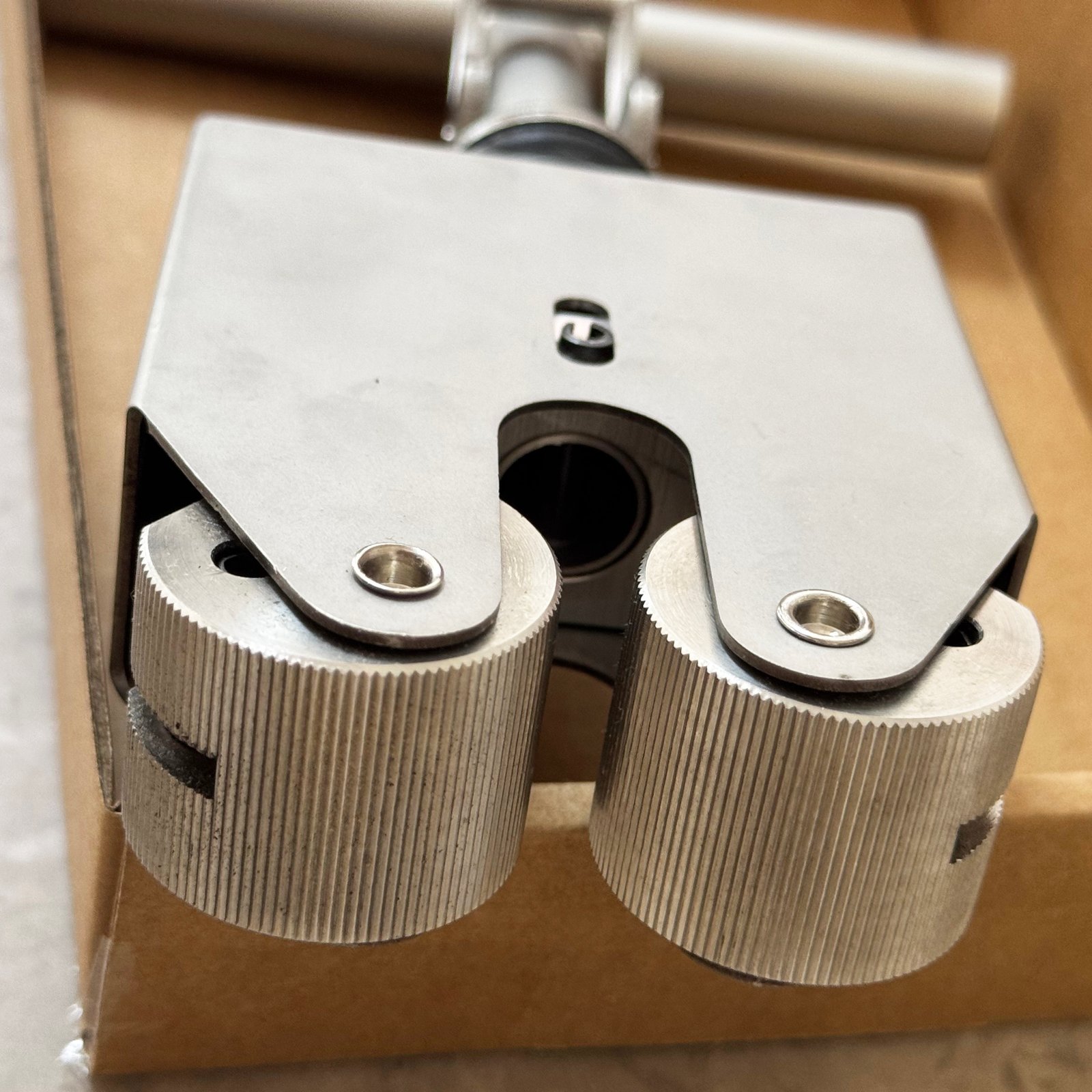
The LESITE LST900 uses a heated metal wedge to soften the overlapping membrane surfaces. Pressure rollers then join the heated layers while the machine travels along the seam at an adjustable speed.
Unlike handheld hot air welding tools, a hot wedge welder is intended for longer, continuous membrane seams. Its mechanical drive and adjustable welding conditions help operators maintain a consistent welding process across suitable working surfaces.
Dual-Track Welding and Air Channel Testing
The LST900 produces two parallel weld tracks with an unbonded channel between them.
This central air channel allows completed seams to be checked using an appropriate pressurized air testing procedure. It is particularly useful in projects where seam continuity and watertightness are critical.
However, an air channel does not automatically verify weld strength or guarantee that a seam meets the project specification. Trial welding, seam inspection and any required destructive or non-destructive testing remain part of the quality control process.
Typical Applications
- Landfills and Environmental Containment
Continuous seam welding of compatible geomembranes used in landfill liners, waste containment facilities and wastewater treatment ponds. - Reservoirs and Water Conservancy
Geomembrane installation in reservoirs, artificial lakes, irrigation ponds, canals and other water-retaining structures. - Mining and Industrial Containment
Welding of suitable liners used in tailings facilities, mining ponds and industrial containment systems, subject to the specified membrane material and chemical resistance requirements. - Aquaculture and Agricultural Ponds
Joining thermoplastic liners used in fish ponds, agricultural reservoirs and other lined water storage facilities.
What Buyers Usually Need to Confirm
– Membrane Material and Thickness
The membrane material should be confirmed before selecting a welding machine.
HDPE, LDPE, PP, TPO and PVC have different thermal welding characteristics. A compatible thickness range alone does not guarantee that the same welding method or settings will be suitable for every material.
The stated welding thickness should also be understood as the thickness of each membrane sheet, not the combined thickness of both overlapping layers.
For waterproofing and containment projects, buyers should check the membrane specification, surface condition and required welding procedure.
– Welding Temperature, Speed and Pressure
Weld quality depends on the relationship between heating temperature, travel speed and applied pressure.
Insufficient heating may result in poor bonding, while excessive heat or unsuitable pressure can damage the liner. Welding too quickly or too slowly can also affect the final seam.
The correct settings should therefore be established through trial welds using the actual membrane material and site conditions.
Changes in ambient temperature, membrane surface condition or working conditions may require adjustments during installation.
– Seam Design and Testing Requirements
For projects requiring leak-resistant seams, the welding method should be selected with the inspection requirements in mind.
Dual-track hot wedge welding provides an air channel that can be used for non-destructive seam testing. The testing procedure, acceptance criteria and any additional weld strength tests should follow the applicable project specifications.
Buyers should confirm the required seam geometry and testing method before ordering equipment.
– Working Surface and Site Conditions
Automatic hot wedge welders are suitable for continuous seams where the equipment can travel along the membrane overlap.
Corners, pipe penetrations, complex details and localized repairs may require different welding tools or methods.
For sloped installations, operators should also consider traction, welding direction, membrane condition and safe equipment handling.
The site power supply must match the equipment requirements and provide suitable grounding and electrical protection. The machine should not be operated in rain, standing water or other unsafe conditions.
– Maintenance and Replacement Parts
The hot wedge and pressure rollers require regular inspection and cleaning to maintain suitable working conditions.
For extended construction projects, buyers should also consider the availability of replacement heating components, temperature sensors, drive parts and other service items.
Spare parts and maintenance arrangements can be important when equipment downtime would interrupt the installation schedule.
Technical Specifications
| Parameter | Specification |
|---|---|
| Brand | LESITE |
| Welding Method | Hot wedge welding |
| Rated Power | 1800W (230V version) |
| Rated Voltage | 230V / 120V versions |
| Frequency | 50/60Hz |
| Compatible Materials | HDPE, LDPE, PP, TPO, PVC |
| Membrane Thickness | 1.0–3.0mm per sheet |
| Welding Speed | 1–5m/min |
| Heating Temperature | 50–450°C |
| Welding Pressure | 100–1000N |
| Overlap Width | 120mm |
| Welding Seam | Two 15mm weld tracks |
| Central Air Channel | 15mm |
| Temperature Control | Digital temperature display |
| Speed Control | Adjustable knob |
| Net Weight | Approx. 13kg |
| Certification | CE |
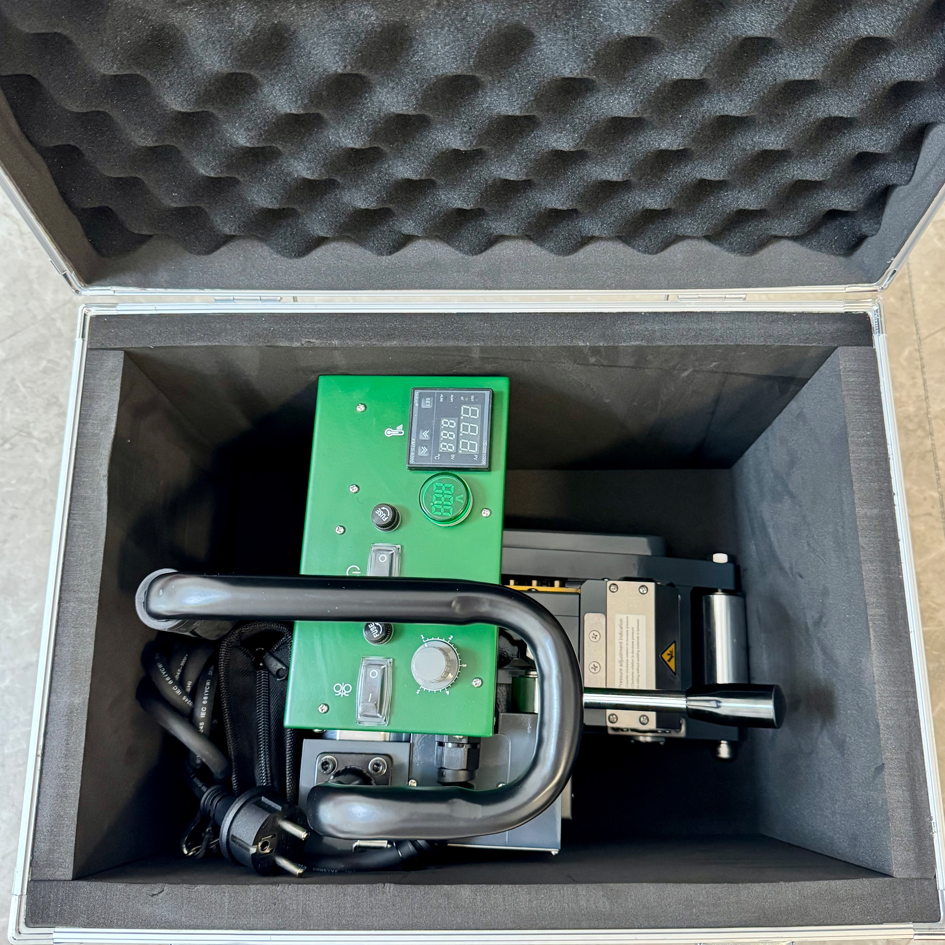
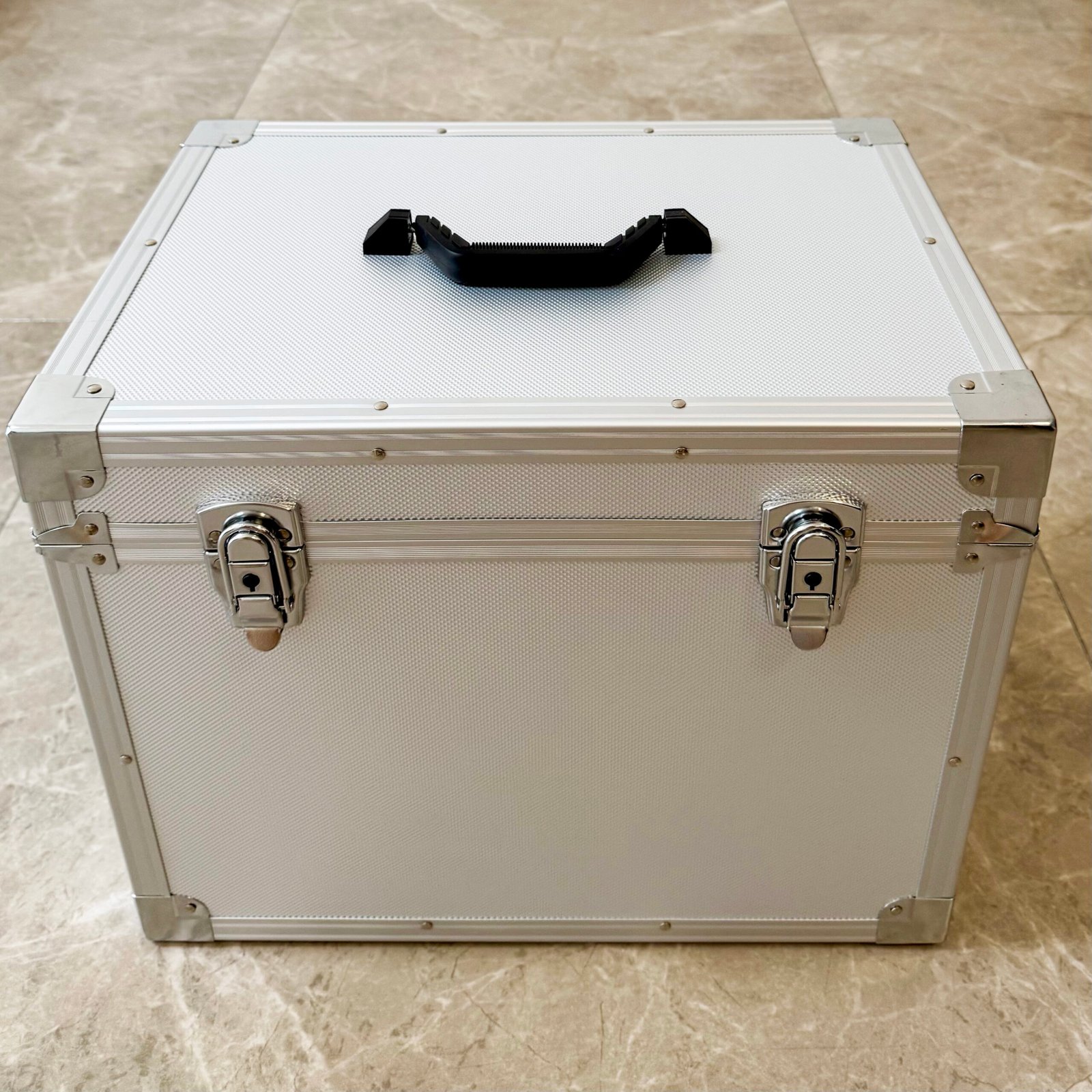
| Carrying Case | Available |
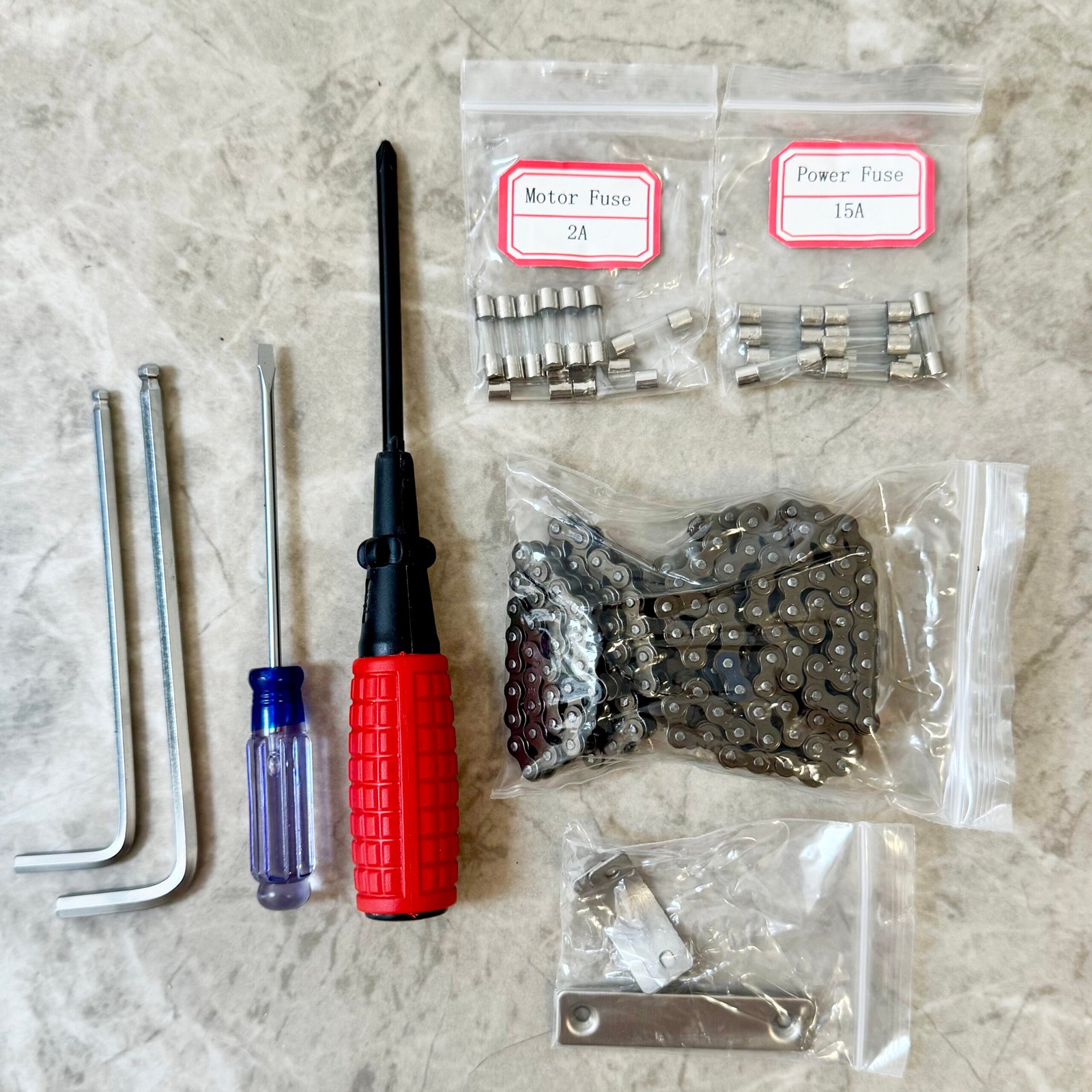
| Accessories & Spare Parts | According to Order Configuration |
Note: Voltage versions, supplied accessories and spare parts should be confirmed when ordering. Welding conditions and seam acceptance requirements depend on the membrane material and installation specifications.
Related Materials & Welding Tools
For HDPE geomembrane installation, the welding equipment must be compatible with the liner material, thickness and required seam specifications.
A hot air plastic welding gun can complement automatic hot wedge welding for temporary tacking, detail work and selected localized repairs. Pipe penetrations and more complex repairs may require specialized extrusion welding equipment.
Send Us Your Requirements
Looking for an automatic geomembrane welder or related waterproofing installation equipment?
Send us the membrane material, thickness, intended application, required voltage, quantity and any specific welding or inspection requirements.
If you already have a technical specification, equipment list or reference photos, these can help clarify the required configuration and obtain comparable supplier quotations.
JXNUO can assist with supplier sourcing, equipment and accessory verification, quotation comparison and procurement coordination based on your requirements.
Request a Quote or Contact Us to discuss your sourcing requirements.


