
Product Overview
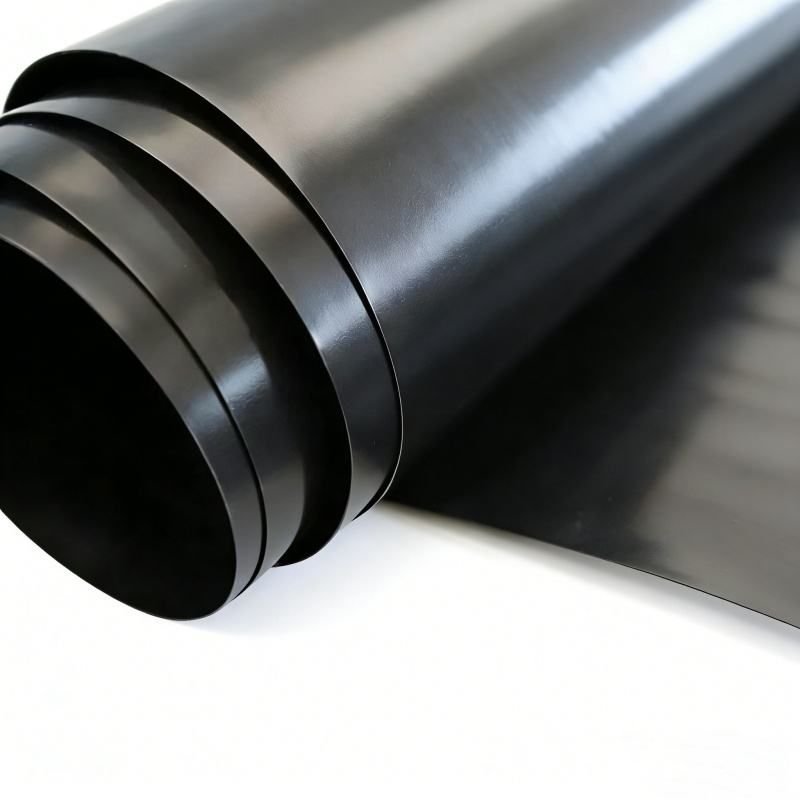
This 1.5mm smooth HDPE geomembrane liner is a high-density polyethylene sheet used to form a low-permeability barrier in water containment, environmental protection and civil engineering projects.
Manufactured with virgin HDPE resin and suitable additives, the black geomembrane has smooth surfaces on both sides. Its material properties are designed for applications requiring resistance to tearing, puncture, environmental stress cracking and long-term exposure to demanding conditions.
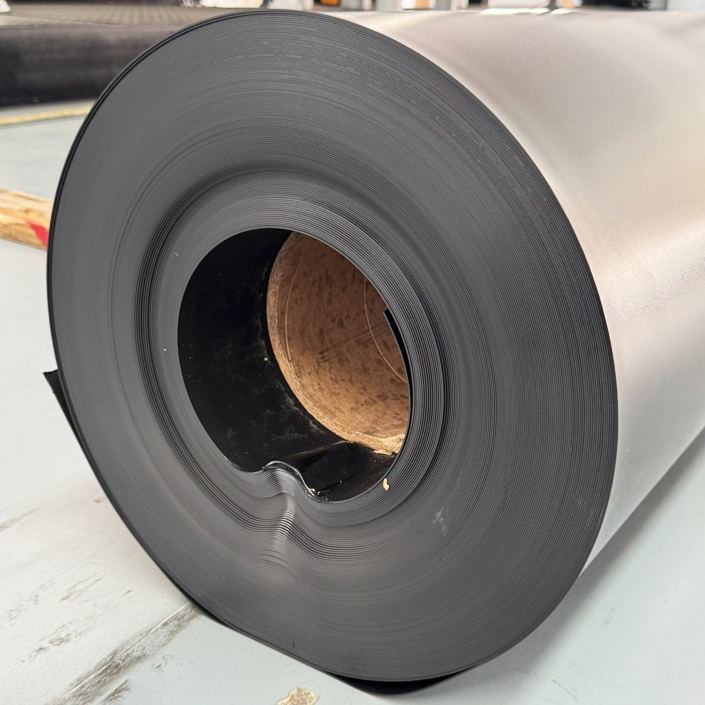
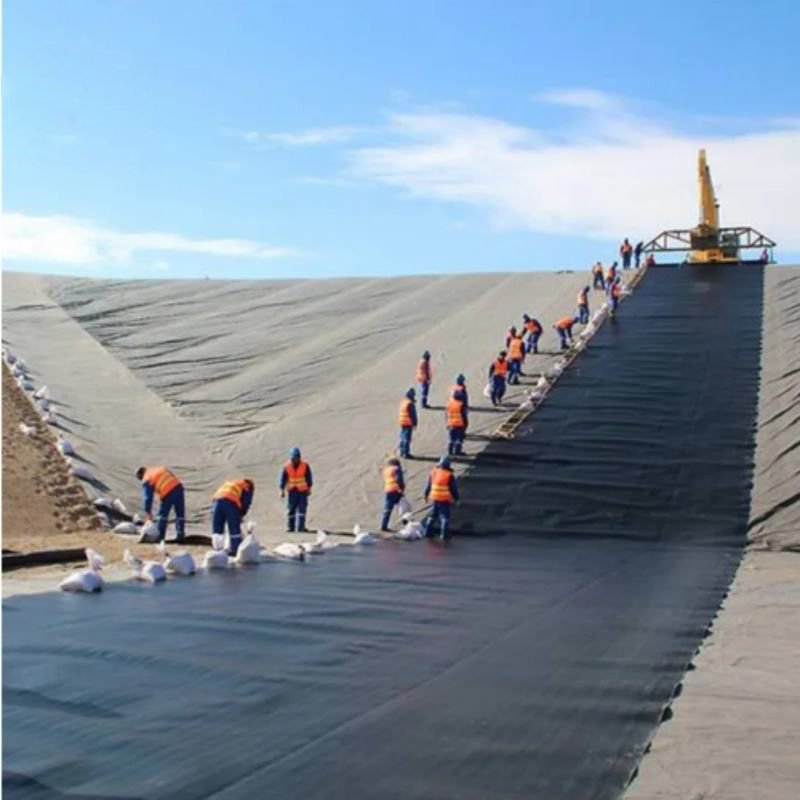
The geomembrane is supplied in rolls and joined on-site to form a continuous lining system. Its performance depends not only on the sheet material but also on subgrade preparation, seam welding, protective layers and installation quality.
Typical Applications
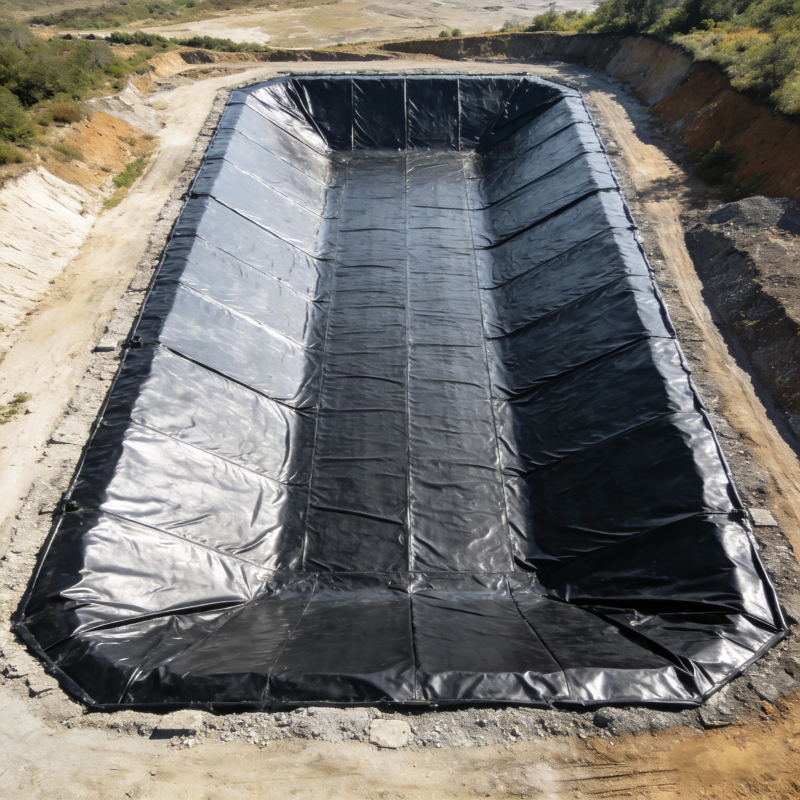
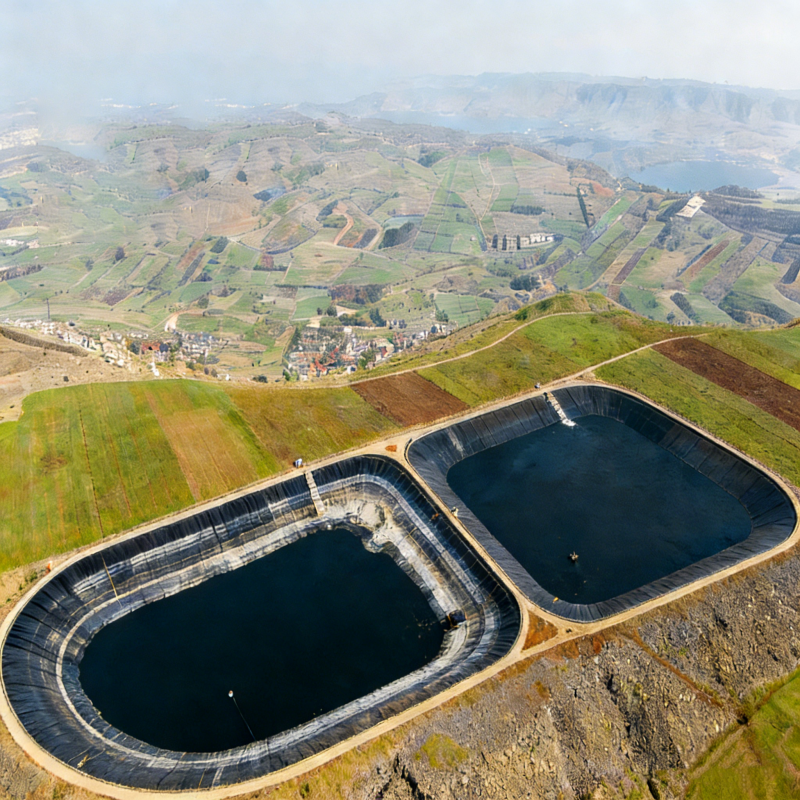
- Water Containment & Reservoirs
Used in reservoirs, artificial lakes, irrigation ponds, canals and other water storage facilities to help control seepage and water loss. - Landfills & Environmental Protection
Used as part of engineered lining systems for municipal waste facilities, landfill containment and wastewater treatment ponds, where material durability and seam integrity are important. - Mining & Industrial Containment
Suitable for selected tailings facilities, mining ponds and industrial containment applications where the liner material meets the specified chemical compatibility and performance requirements. - Aquaculture & Agricultural Ponds
Used for fish ponds, aquaculture facilities and agricultural water storage systems that require a continuous waterproof lining.
What Buyers Usually Need to Confirm
① Virgin Resin and Material Composition
Virgin HDPE resin is an important consideration when sourcing geomembranes for projects with defined material specifications.
However, virgin resin does not mean the finished sheet contains only pure HDPE. Black geomembranes also contain additives such as carbon black and antioxidants, which contribute to weathering and aging resistance.
When virgin resin is required, buyers should ensure that the material formulation, recycled-content restrictions and supporting quality documents are clearly specified in the purchase requirements.
② Nominal Thickness and Thickness Tolerance
Nominal thickness alone does not describe every point across a geomembrane roll.
The specified average thickness and permitted individual thickness variation should be checked against the applicable standard and project requirements.
For engineering projects, thickness verification is particularly important when comparing quotations from different suppliers. Two products described by the same nominal thickness may not necessarily follow the same tolerance or testing requirements.
③ Smooth or Textured Surface
Smooth HDPE geomembranes are commonly selected for lining applications where the specified interface friction and installation conditions are suitable.
Textured geomembranes may be preferred on certain slopes or interfaces where higher frictional resistance is required.
The choice should be based on the lining system design, contact materials, slope conditions and interface stability requirements rather than surface appearance alone.
④ Mechanical Properties and Long-Term Performance
For containment projects, buyers should look beyond basic tensile strength.
Tear resistance and puncture resistance relate to mechanical damage during handling and installation, while stress crack resistance and oxidative induction time provide information relevant to the material’s long-term performance.
A technical data sheet helps establish the required properties, but test results should be checked against the applicable specification and the material being supplied.
Where independent testing is required, the test scope, sample identification and relationship to the production batch should be agreed before shipment.
⑤ Roll Dimensions and Transportation
Roll width and length can affect installation efficiency, the number of field seams and transport arrangements.
Wider rolls may reduce the number of joints, but they also require appropriate handling equipment and consideration of delivery access, roll weight and unloading conditions.
For project procurement, the required total area should account for overlaps, trimming, anchoring and installation allowances rather than being based only on the net surface area.
⑥ Installation and Seam Welding
HDPE geomembrane sheets are commonly joined using suitable thermal welding methods.
For continuous field seams, an automatic hot wedge welder may be used to form parallel weld tracks with an air channel for seam testing. Complex details, penetrations and certain repairs may require other approved welding methods.
The welding procedure, trial welds and seam testing should follow the membrane specification and project quality requirements.
Where protection against puncture or abrasion is needed, a suitable geotextile layer may also be included in the lining system.
Customization & Supply Options
The product shown is a black, smooth-surface geomembrane with a nominal thickness of 1.5mm.
For other projects, sourcing requirements may include:
- Thickness: Alternative thicknesses according to the project specification.
- Roll Width & Length: Dimensions selected according to installation layout, manufacturing capability and transport limitations.
- Color: Black as the standard configuration; other colors subject to formulation and availability.
- Packaging & Marking: Roll identification, protective wrapping, labels and shipping marks.
- Technical Requirements: Specified material properties, test methods, inspection documents and batch identification.
Alternative configurations should be evaluated against the required material performance rather than treated as interchangeable options.
Technical Specifications
| Parameter | Specification |
|---|---|
| Material | Virgin HDPE resin with additives |
| Surface | Smooth on both sides |
| Color | Black |
| Nominal Thickness | 1.5mm |
| Technical Specification | GRI-GM13-based requirements |
| Thickness Test Method | ASTM D5199 |
| Lowest Individual Thickness | ≥90% of nominal thickness |
| Formulated Density | ≥0.940g/cm³ |
| Tensile Strength at Yield | ≥22kN/m |
| Tensile Strength at Break | ≥40kN/m |
| Elongation at Yield | ≥12% |
| Elongation at Break | ≥700% |
| Tear Resistance | ≥187N |
| Puncture Resistance | ≥480N |
| Stress Crack Resistance | ≥500 hours |
| Carbon Black Content | 2.0–3.0% |
| Standard OIT | ≥100 minutes |
| Oven Aging at 85°C | Standard OIT retained ≥55% after 90 days |
| Roll Width & Length | According to order requirements |
| Packaging | Rolls with protective packaging |
The technical requirements and testing scope should be confirmed against the approved project specification. Batch-specific inspection or independent testing can be arranged where required.
Related Materials & Installation Equipment
Nonwoven geotextile may be used above or below an HDPE geomembrane as a protective or separation layer, depending on the lining system design and subgrade conditions.
For continuous field seams, an automatic geomembrane welder can be used where its welding method is suitable for the membrane thickness and project requirements.
Selecting compatible materials and installation equipment helps ensure the procurement specifications are consistent with the intended lining system.
Send Us Your Requirements
Looking for smooth HDPE geomembrane for a waterproofing or containment project?
Send us your required thickness, total area, roll dimensions, application, technical specifications and estimated order quantity.
Project drawings, material schedules or testing requirements are also helpful when preparing quotations and comparing supplier offers.
JXNUO can assist with supplier sourcing, technical specification checks, quotation comparison, inspection coordination and shipment arrangements based on your requirements.
Request a Quote or Contact Us to discuss your sourcing requirements.


