
A client asked us to consolidate a full 40HQ container to Europe made up of multiple product categories. After sourcing and evaluating suppliers, we coordinated nine factories across the project.
What followed was a tightly scheduled, detail-driven operation — from sample testing and packaging alignment to on-site inspections, loading execution, and final customs coordination. Below is how we ran the project, the practical issues we solved, and why working with a supply-chain partner matters when multi-supplier complexity is high.
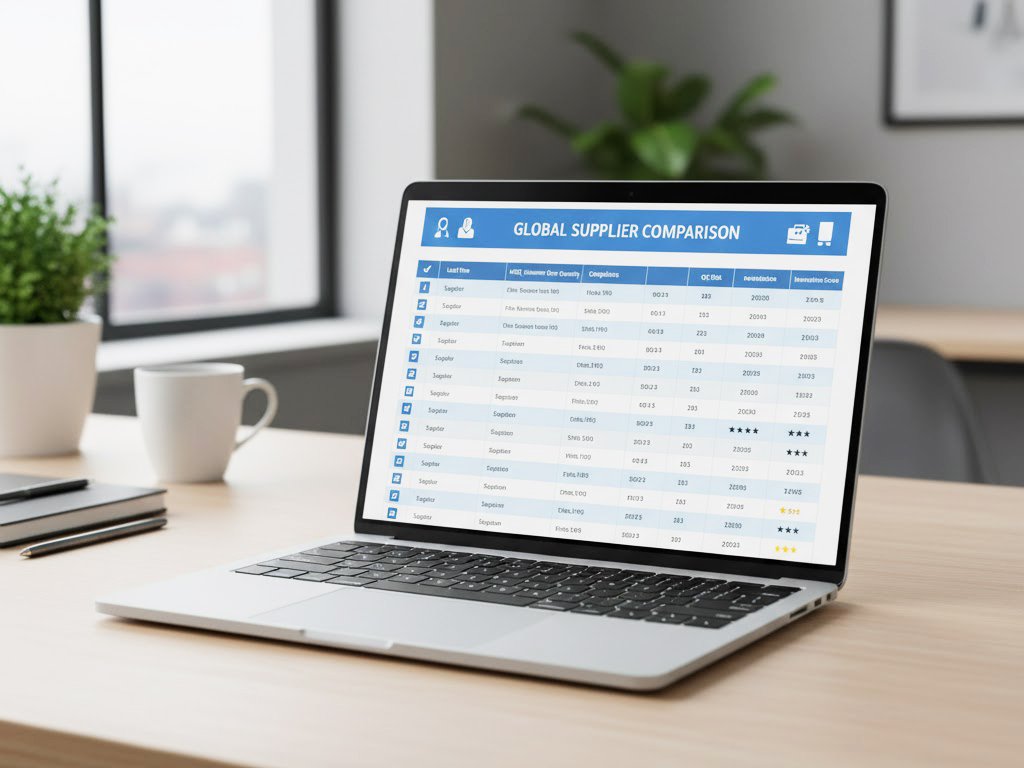
01. Sourcing — 3 to 5 candidates per product, decisions based on risk, not only price
For each SKU, we screened three to five suppliers and compared function, sample test results, production capacity, lead time, and historical reliability. We ran sample tests, logged the results, and prepared a shortlist for the client.
Our recommendation was based on deliverability, not just quotation level. We selected a supplier mix that could meet the required specs and schedule, instead of simply choosing the lowest price. This reduced one of the most common early-stage risks in multi-supplier shipments: selecting a factory that later delays production or delivers non-conforming goods.
02. Product details and packaging alignment — one standard for all suppliers
After the client confirmed the supplier mix, we locked down product functions, OEM details, and unified packaging standards, including carton size, labeling, and palletizing rules. Templates were issued to each factory, and acceptance was confirmed in writing. Standardizing packaging at this stage reduced handling errors later and ensured that every carton contributed to better container utilization.
For mixed containers, packaging alignment is not a minor detail. It directly affects loading efficiency, space usage, and the likelihood of downstream mistakes.
03. Production tracking and consolidation planning — correct numbers, correct order
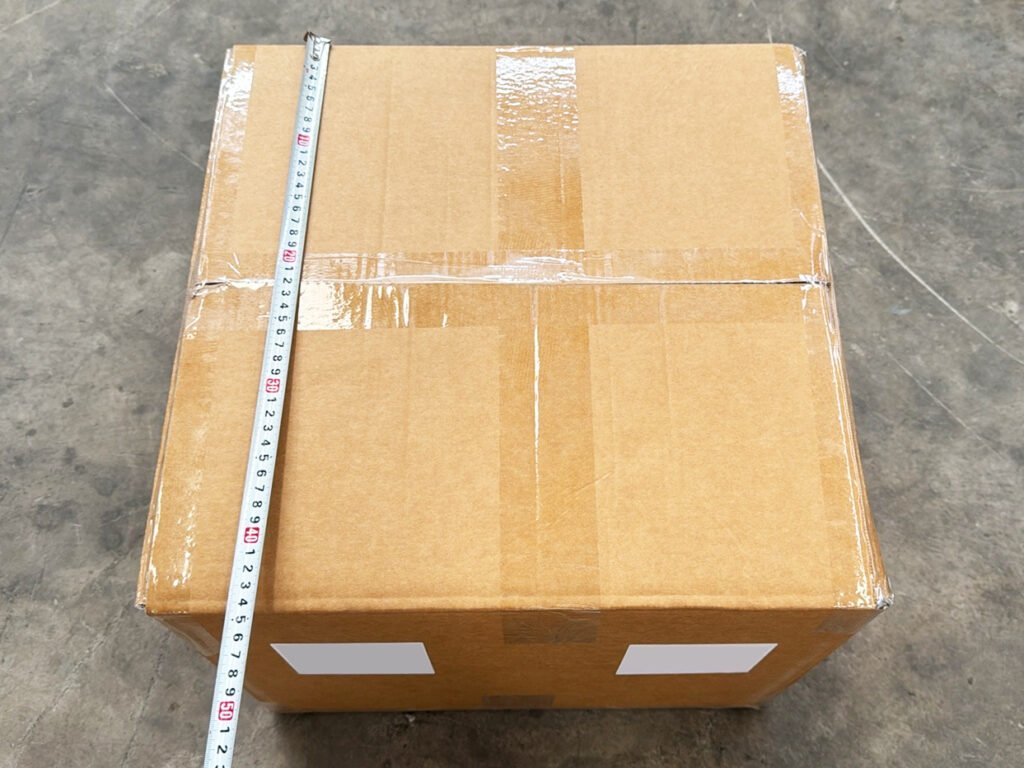
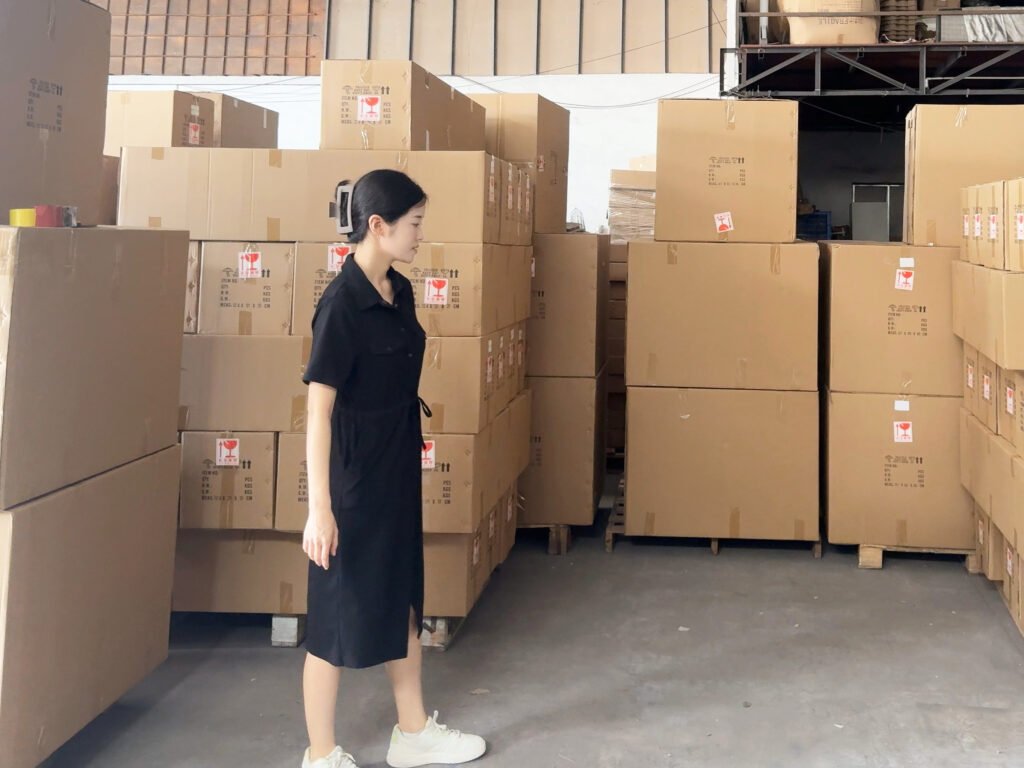
During production, we tracked progress daily and coordinated collection plans so inland transport could be consolidated at a single hub; Before pickup, we re-checked every supplier’s packing list and dimensional data and then calculated an optimized loading plan.
In this case, several suppliers had incorrect carton dimensions on their paperwork. We corrected the data before loading, which helped avoid partially filled space, inefficient inland transport, and unnecessary re-moves.
That meant direct savings in both time and transport cost. It also gave the client more confidence that the final 40HQ plan was based on real numbers, not assumptions.
04. On-site inspection and immediate remediation — preventing costly surprises
Our inspection teams measured dimensions, tested functions, verified certificates, and checked packaging compliance before loading.
In one case, a supplier’s battery packaging failed safety requirements. We removed that batch before it entered the container. Loading a non-compliant DG item can trigger port inspection, secondary unloading, re-packing, heavy port fees, and missed sailings. The cost of fixing the issue after loading would have been far higher than the cost of catching it before shipment.
This is why pre-shipment inspection is not just about product quality. It is also about shipment continuity, compliance risk, and cost control.
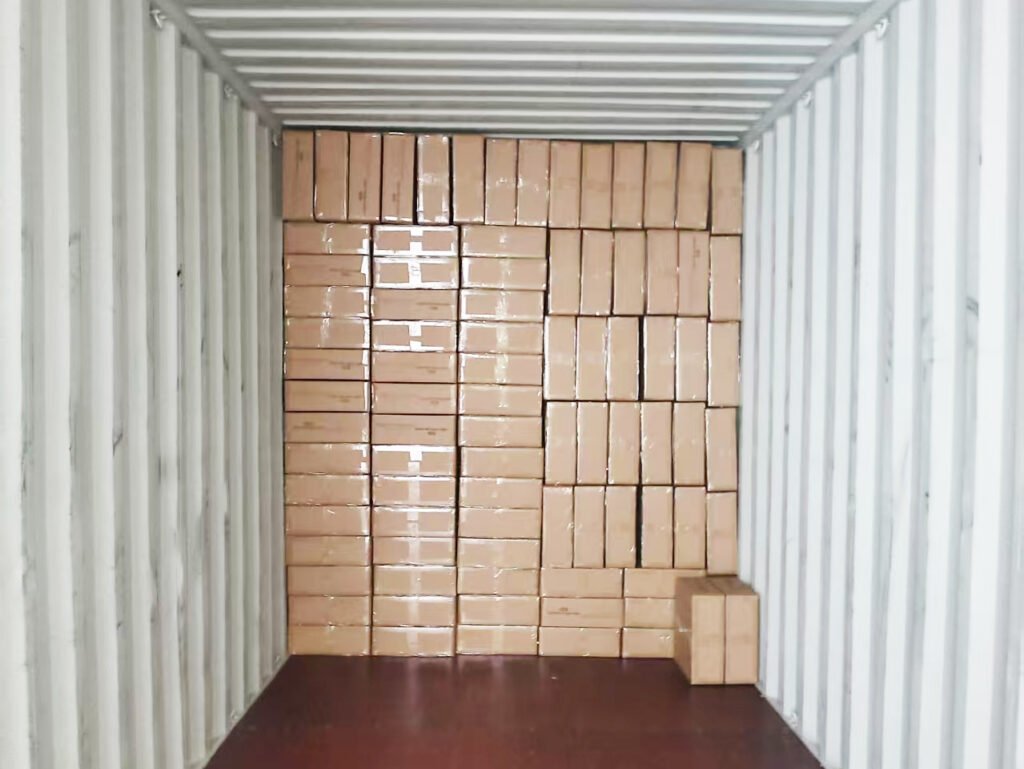
05. Loading day and customs readiness — choreography matters
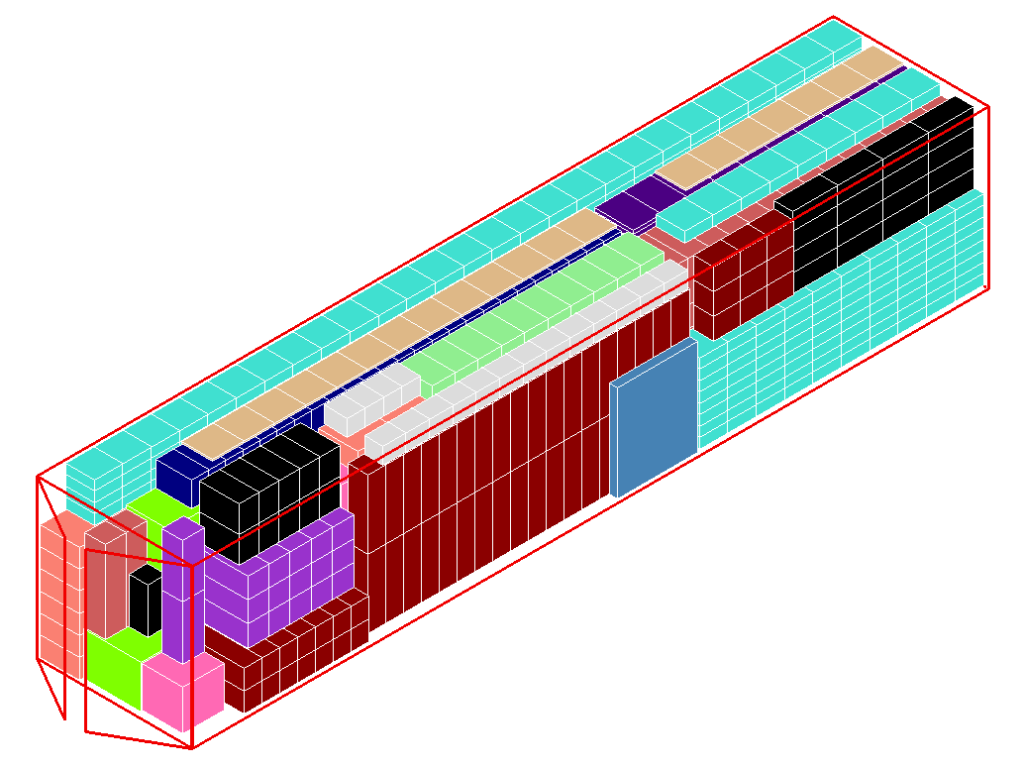
On loading day, we managed the placement sequence to support more efficient off-load at destination, documented photos and weights, and ensured that all paperwork — invoices, packing lists, certificates, and BL data — matched what customs would expect. We also coordinated with the client’s nominated clearing agent at the port.
Because the documentation was clean and the container was loaded in a logical off-load order, the shipment cleared quickly at destination. The client returned from vacation to find the container already unloaded and accepted.
That outcome was not luck. It came from preparation across the full process, not just on the day of loading.
Results —
What the Client Gained
This is how JXNUO turns complexity into certainty.
Need Support for a
Multi-Supplier Shipment?
If you manage mixed containers, multi-supplier sourcing, or products with compliance risk — and you value predictable execution — JXNUO can help you coordinate the process on the ground in China.
We support projects that require more than simple supplier communication: planning, verification, correction, loading logic, and customs-ready execution.